
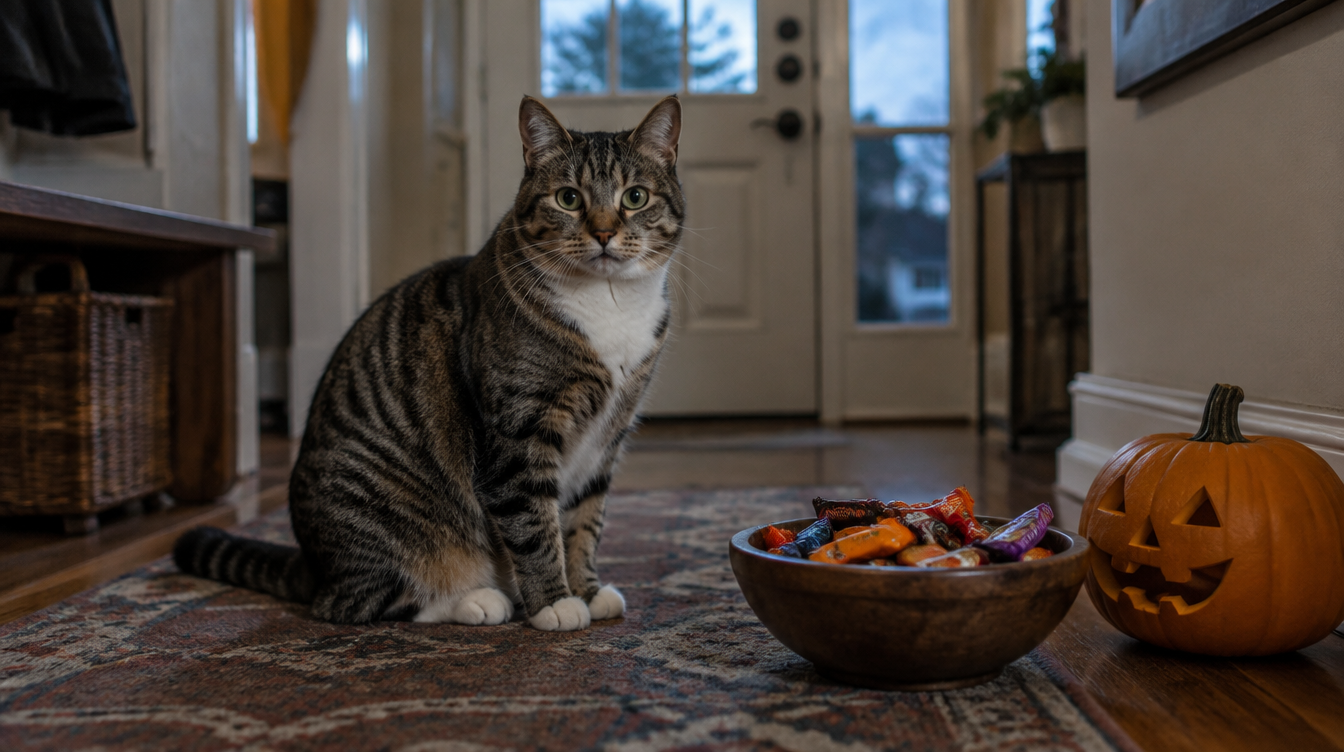
Halloween with pets: candy, costumes and a busy front door


By Paws & Claws Animal Hospital • October 6, 2026

Halloween is a few weeks out, which means the candy is already in the house. And if the candy is in the house, somebody with four legs has already noticed where you put it.

We see the same handful of Halloween problems every year here in Nashville, and nearly all of them are easy to avoid with a little planning. Here is what we would tell you if you asked us in the exam room.

Put the candy up high (higher than that)

Most Halloween calls we get are about candy. The big ones to know:

  • Chocolate. It is toxic to dogs and cats. Dark and baking chocolate are the most dangerous, but any kind is worth a phone call.
  • Xylitol. This sweetener shows up in sugar-free gum, mints and some candies. Even a small amount can be very dangerous for dogs.
  • Raisins. Those little boxes seem like the healthy option, but raisins and grapes can cause serious kidney trouble in dogs.
  • Wrappers and sticks. Foil, plastic and lollipop sticks can get stuck on the way through.

Dogs are the usual suspects, but cats will happily bat a wrapped candy under the couch and chew on it later. Keep the bowl in a closed cabinet or on a high shelf, and remind the kids that the trick-or-treat bag does not live on the bedroom floor.

If your pet does get into the stash, please do not wait to see what happens. Call us at (615) 833-4423 during the day. After hours, call one of the hospitals on our emergency info page or ASPCA Animal Poison Control at (888) 426-4435 (a consultation fee may apply). It helps a lot if you can tell them what was eaten, roughly how much, and when.

Costumes are optional, and your pet gets a vote

Some dogs love dressing up. Some cats will tolerate a tiny hat for the length of one photo. Plenty of pets want nothing to do with any of it, and that is fine.

If you are going to try a costume:

  • Do a trial run a few days early, with treats, for a few minutes at a time.
  • Make sure it does not cover the eyes, ears, nose or mouth, and that your pet can walk, sit and breathe normally.
  • Check for buttons, bells, ribbons and other dangly bits that could be chewed off and swallowed.
  • Never leave a pet in a costume unsupervised.

Signs your pet is not having fun include freezing in place, pinned ears, a tucked tail, hiding, or frantic attempts to wriggle free. If you see those, take it off. A festive bandana or a seasonal collar gets you the cute photo with a lot less drama.

Have a plan for the doorbell

From a pet's point of view, Halloween is a parade of strangers in masks ringing the bell every two minutes while the front door swings open over and over. Even easygoing pets can get stressed, and stressed pets tend to bolt.

The simplest fix is a quiet room away from the front door. Set it up with a bed, water, a favorite toy and a litter box for cats, then put on some music or the TV to cover the noise. A chew or food puzzle keeps dogs busy for a good while.

We also suggest keeping cats indoors on Halloween night and the nights around it. There is a lot of foot traffic and a lot of cars, and it is just a safer evening to spend on the couch.

Before the big night, check that your pet's collar fits and the ID tag is readable. If your pet has a microchip, make sure the phone number on file is current. If they do not have one yet, it is a quick thing we can do during a regular visit.

If your pet really struggles with noise and visitors, give us a call ahead of time. There are things we can talk through, and it is much easier to plan a couple of weeks early than at 6 p.m. on October 31.

Watch the decorations too

A few things around the house deserve a second look:

  • Candles and jack-o'-lanterns. A wagging tail or a curious cat can knock one over fast. Battery candles are a good swap.
  • Glow sticks. Cats love to chew them. The liquid inside tastes awful and can cause a lot of drooling and pawing at the mouth. Give us a call if it happens.
  • Cords, batteries and fake cobwebs. Chewed cords and swallowed batteries are real emergencies, and stringy things are especially risky for cats.
  • Pumpkins and corn stalks. A nibble is usually no big deal, but a pumpkin that has been rotting on the porch can upset a stomach.

If you are taking the dog trick-or-treating

Some dogs do great walking the neighborhood with the kids. Use a sturdy leash, add something reflective or a clip-on light, and keep an eye on the sidewalk for dropped candy. If your dog seems overwhelmed by the crowds and costumes, it is okay to take them home early. They will not feel left out.

Have a fun one

That is really it. Hide the candy, skip the costume if your pet hates it, and give them a quiet spot away from the door. A little prep makes the night a lot more fun for everybody.

If you have questions, or you would like to get a microchip or a checkup on the calendar before the holidays pile up, give us a call or request an appointment online. Happy Halloween from all of us at Paws & Claws.

Have you scheduled your pets annual exam?


SHARE THIS

Latest Posts

By Paws & Claws Animal Hospital • October 16, 2026
Indoor cats still need a few core vaccines. Here is why, which ones matter most, and what to expect at the visit, from your Nashville neighborhood vet.
By Paws & Claws Animal Hospital • October 16, 2026
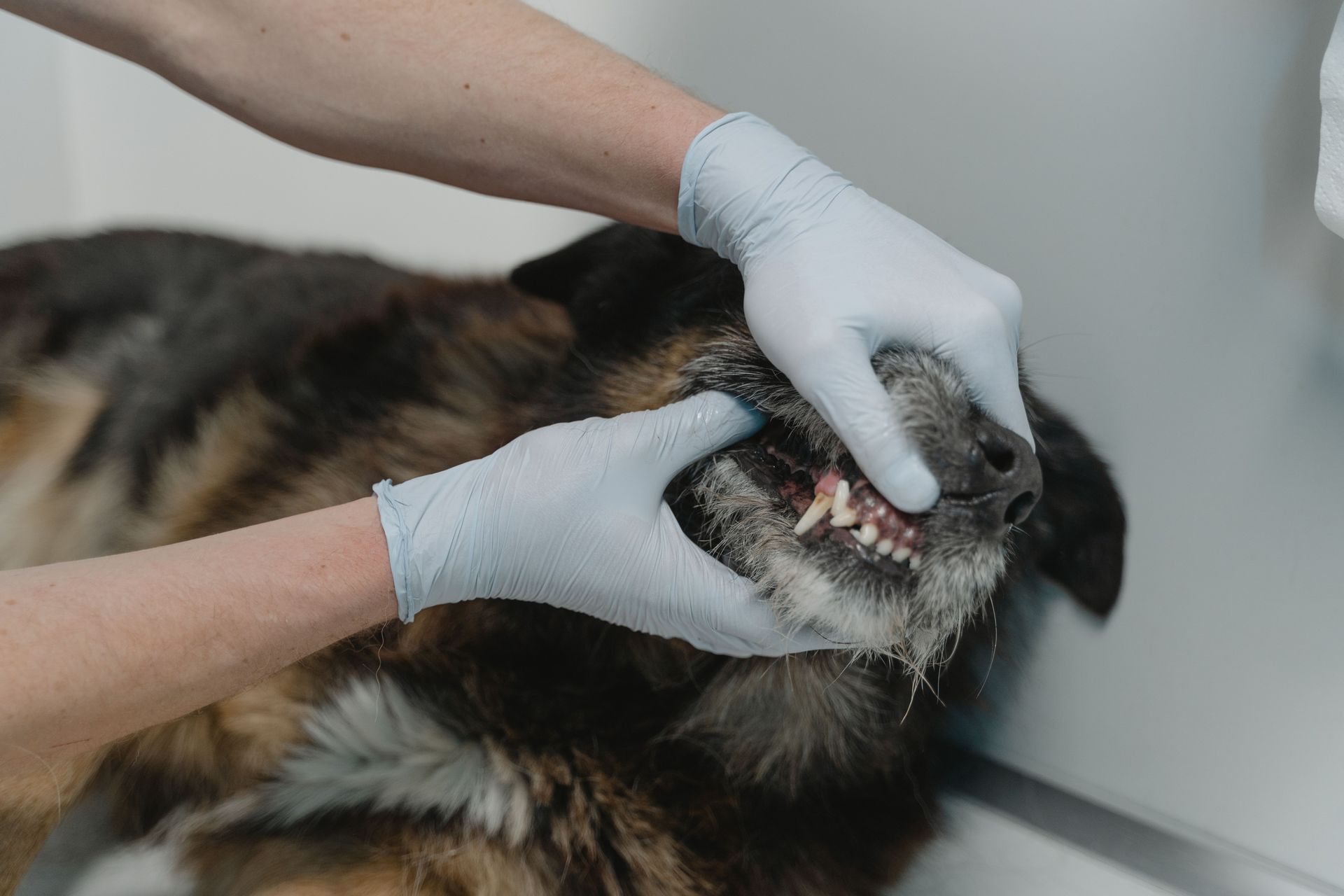
What happens during a dog or cat dental cleaning, why we use anesthesia, signs to watch for, and how to care for teeth at home. From your South Nashville vet.
By Paws & Claws Animal Hospital • October 16, 2026
Mushrooms, acorns, rat bait and antifreeze all show up around Nashville homes in fall. Here is what to watch for with dogs and cats, and when to call us.
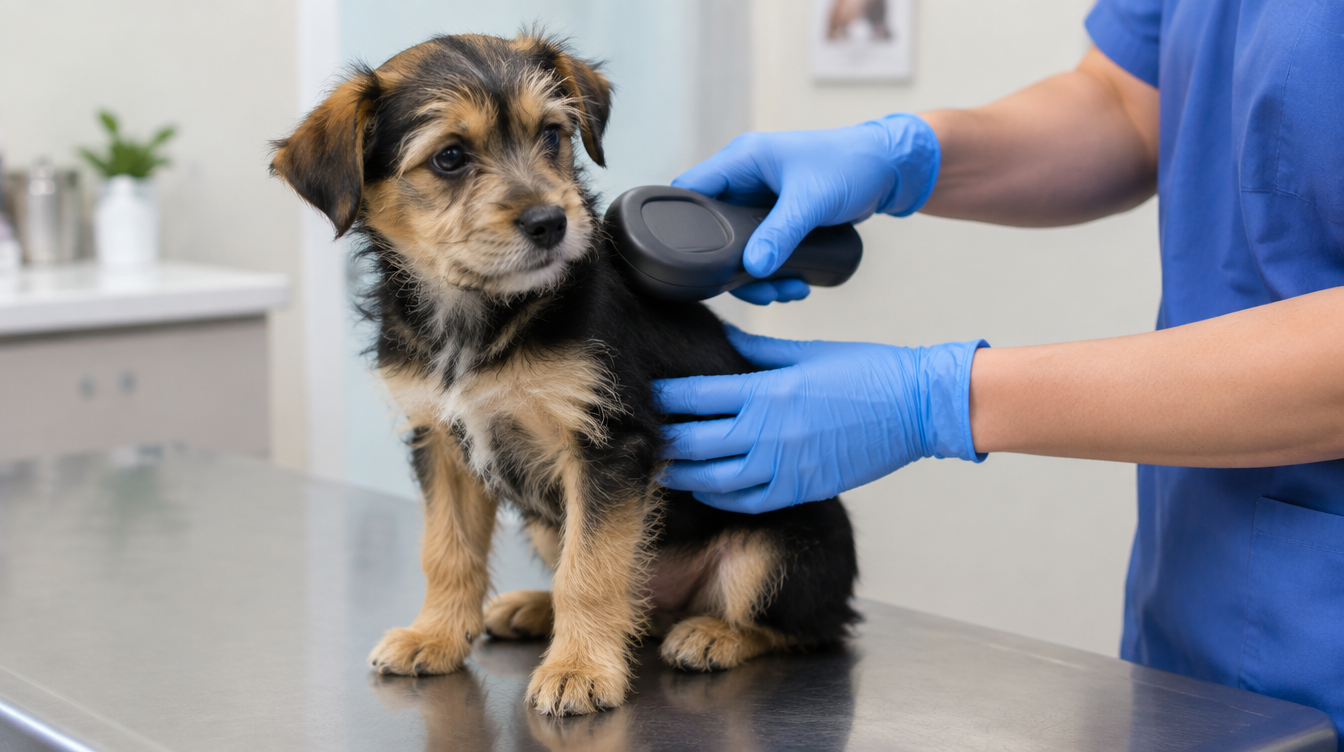
Puppy on an exam table being scanned for a microchip
By Paws & Claws Animal Hospital • October 4, 2026
What a pet microchip is, how we place one, what it can and cannot do, and why keeping the registration current matters. From your Nashville neighborhood vet.
Dog on a leash walking a leaf-covered greenway trail in fall
By Paws & Claws Animal Hospital • October 2, 2026
Our favorite fall dog walks in Nashville, from Warner Parks trails to Metro dog parks, plus the leash rules and tick checks to know before you head out.
Orange tabby cat and pug sitting side by side looking up
By Paws & Claws Animal Hospital • September 28, 2026
A simple at-home check for dogs and cats, why a few extra pounds matter more than you'd think, and easy ways to help, from your Nashville neighborhood vet.
Dog standing in tall winter grass at the edge of the woods
By Paws & Claws Animal Hospital • September 16, 2026
Fleas and ticks stay active through Tennessee winters. Here is why Nashville dogs and cats need prevention all year, and how the products actually work.
Gray cat curled up under a blanket on a couch
By Paws & Claws Animal Hospital • September 2, 2026
Cats are experts at hiding illness. Here are the small changes in eating, grooming, litter box habits and behavior that mean it's time to call your vet.
Labrador scratching its ear in a leafy fall backyard
By Paws & Claws Animal Hospital • August 26, 2026
Itchy skin, paw licking and ear trouble often flare in fall. Here is what allergies look like in Middle Tennessee dogs and cats, and when to bring them in.
Beagle looking up at a Thanksgiving table
By Paws & Claws Animal Hospital • August 12, 2026
Thanksgiving foods for pets, sorted: what dogs and cats can share in small bites, what to keep off their plate, and when to call your Nashville vet for help.
Show More